
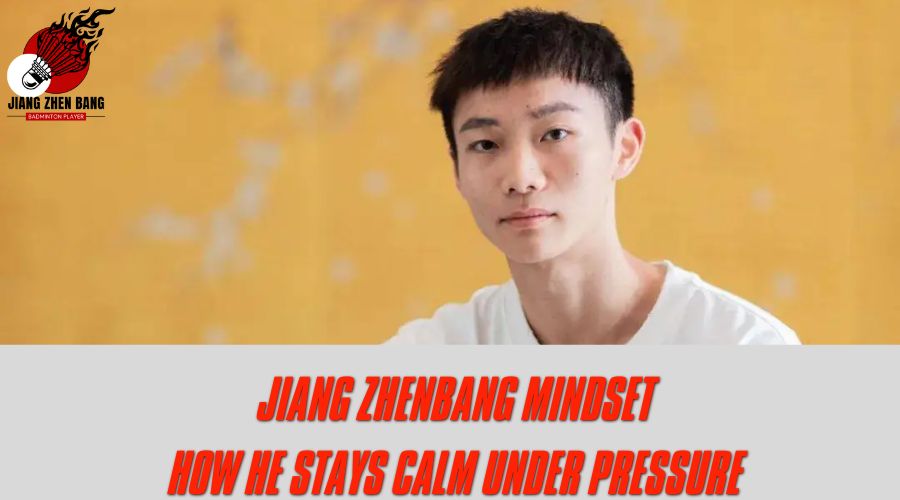
The evolution of the Jiang Zhenbang mindset is one of the most fascinating aspects of his rise. Calm, measured, and emotionally unshakeable, Jiang competes with a level of poise rare for his age – a quality shaped not only by talent and training, but by a deep psychological discipline that defines him in moments when the sport becomes unforgiving.
The Origins of Jiang’s Composure
The foundation of the Jiang Zhenbang mindset was laid long before he entered the spotlight. Growing up in Guilin and later training in Shanghai from the age of eight, Jiang developed emotional independence early. Living away from home, adhering to strict routines, and growing within a demanding system forged a natural steadiness in him.
Early exposure to high expectations
Athlete dormitories teach both discipline and emotional neutrality. Children learn to manage their own frustrations, push through fatigue, and maintain composure in environments where pressure is constant. Jiang internalized this structure early, which later translated into his on-court behavior.
Learning to absorb pressure, not fight it
Young athletes often react emotionally to stress, but Jiang learned to respond with stillness. This trait did not come from personality alone – it was shaped by years of structured training and psychological conditioning.
The Role of Personality in His Competitive Identity
Jiang is not a loud or expressive player. His energy is inward, controlled, deliberate – a contrast to some of badminton’s more explosive personalities.
Introversion as a competitive advantage
Introverted athletes often excel in sports requiring deep focus and tactical clarity. Jiang’s quiet temperament allows him to read patterns calmly, make measured decisions, and avoid emotional swings that disrupt momentum.
A mindset built on clarity rather than emotion
Where many rely on adrenaline, Jiang relies on structure:
- clear tactical plans
- controlled breathing
- defined roles
- predictable decision-making cycles
This emotional architecture helps him maintain stability even in chaotic rallies.
How Jiang Handles High-Pressure Points
In mixed doubles, pressure moments arrive quickly – sudden interceptions, flat exchanges, late-game duels. Jiang’s calmness has become a defining feature of his playing identity.
Slowing down the mental clock
One of his greatest strengths is the ability to “slow” the match mentally. Under pressure, Jiang focuses on:
- narrowing his field of attention
- reducing unnecessary movement
- stabilizing tempo
- making high-percentage choices
This prevents panic-driven errors and keeps rallies controlled.
Trusting his partner as part of his calmness
The Jiang Zhenbang mindset is reinforced by his trust in Wei Yaxin. Because he doesn’t feel the need to overplay or cover beyond his zone, he can maintain emotional neutrality and stay connected to tactical flow.
The Psychological Synergy of Jiang & Wei
A strong mindset becomes even more powerful in a compatible partnership. Jiang and Wei share an emotional wavelength: both calm, measured, and strategic.
Emotional mirroring
In stressful matches, they stabilize each other.
Wei’s confidence at the net reassures Jiang; Jiang’s calmness in the rear court keeps Wei composed.
Communication that reduces pressure
Their exchanges are simple and minimal. They do not need lengthy mid-match discussions – a short cue or nod is enough to reset mentally and stay aligned.
Mental Habits That Support Jiang’s Performance
Behind the scenes, several habits contribute to Jiang’s psychological stability.
Routine as emotional grounding
Athletes thrive on predictability. Jiang maintains consistent pre-match routines:
- warm-up sequences
- quiet visualization
- short tactical briefings
These reduce anxiety and anchor him before stepping on court.
Detachment from external noise
Jiang rarely engages with hype, narratives, or pressure from media – a trait that shields him from distractions and protects his emotional bandwidth.
Mature Decision-Making at a Young Age
At just 24, Jiang displays a level of psychological maturity usually seen in veterans. This maturity comes from:
Controlled emotional expression
He celebrates wins calmly and absorbs losses without visible frustration.
This balanced response prevents mental fatigue over the course of long tournament seasons.
Tactical patience
Instead of forcing winners, Jiang builds rallies with intention.
Patience under pressure is a psychological skill – not just a tactical one.
The Future of Jiang’s Mental Game
As the Jiang Zhenbang mindset continues to mature, it may become one of his greatest competitive assets. Mental durability often determines longevity in badminton, and Jiang already demonstrates traits typical of champions:
- emotional control
- tactical clarity
- low-variance performance
- stable concentration
- resilience after tough matches
These qualities suggest that his best years – mentally and competitively – are still ahead.
The mindset behind Jiang Zhenbang’s rise is not built on intensity, but intentionality. Calm, analytical, and deeply composed, he brings psychological steadiness to one of badminton’s most demanding disciplines. As his career advances, this inner stillness may become the foundation on which future titles, finals, and breakthroughs are built.
